I decided to write a blog post on my recent trip to Indonesia and Singapore as a small ode to my parents' home countries and the cultural background that is integral to my identity and my family history.
Having a unique tapestry of cultural history is what makes learning about my family so interesting in the first place. Hopefully I can continue to write and learn about it in an exercise in embracing my cultural background.
*I realise at the end of writing this post that I have mostly just yapped about food.
Malang, Jawa Timur
This small quasi city 100km south of Surabaya in East Java is one of many known in the archipelago for its' tasty cuisine, and was my first stop. Our first tourist attraction was Kampung Heritage Kajoetangan, a village which functions as a heritage project, not dissimilar to the more visually recognisable Kampung Warna Warni (a rainbow village in Malang that has gone viral online).
Walking through the neighbourhood, I passed by both regular homes and more ornately decorated displays alike. A distinct home I remember was one which contained nostalgic decorations including a wall of ceramic plates and beautifully lacquered wooden furniture.
As we made our way through, we walked past several vignettes of life. Children playing along corridors; chatter between a stall owner and a customer; windows from which the sound of a television would pour out; other visitors posing in front of signs and holding up coffee from the neighbourhood cafe to snap a photo.
I was then reminded of my role in this scene - not a formless, invisible observer, but a tourist who had paid money to visit this neighbourhood. I felt exploitative, even though all I had done was merely walk down streets.
At the periphery of the village, we popped into a cafe with an endearing exterior, abundant with potted plants and an entryway which made it seem like you were stepping into a fairy's cave. Inside were groups of students typing on laptops, Canva open with empty glasses of iced coffee placed beside them. Teenagers smoking and eating snacks, listening to the music which played from the speakers. A young girl hopping on stepping stones as her mother chatted with her friends.
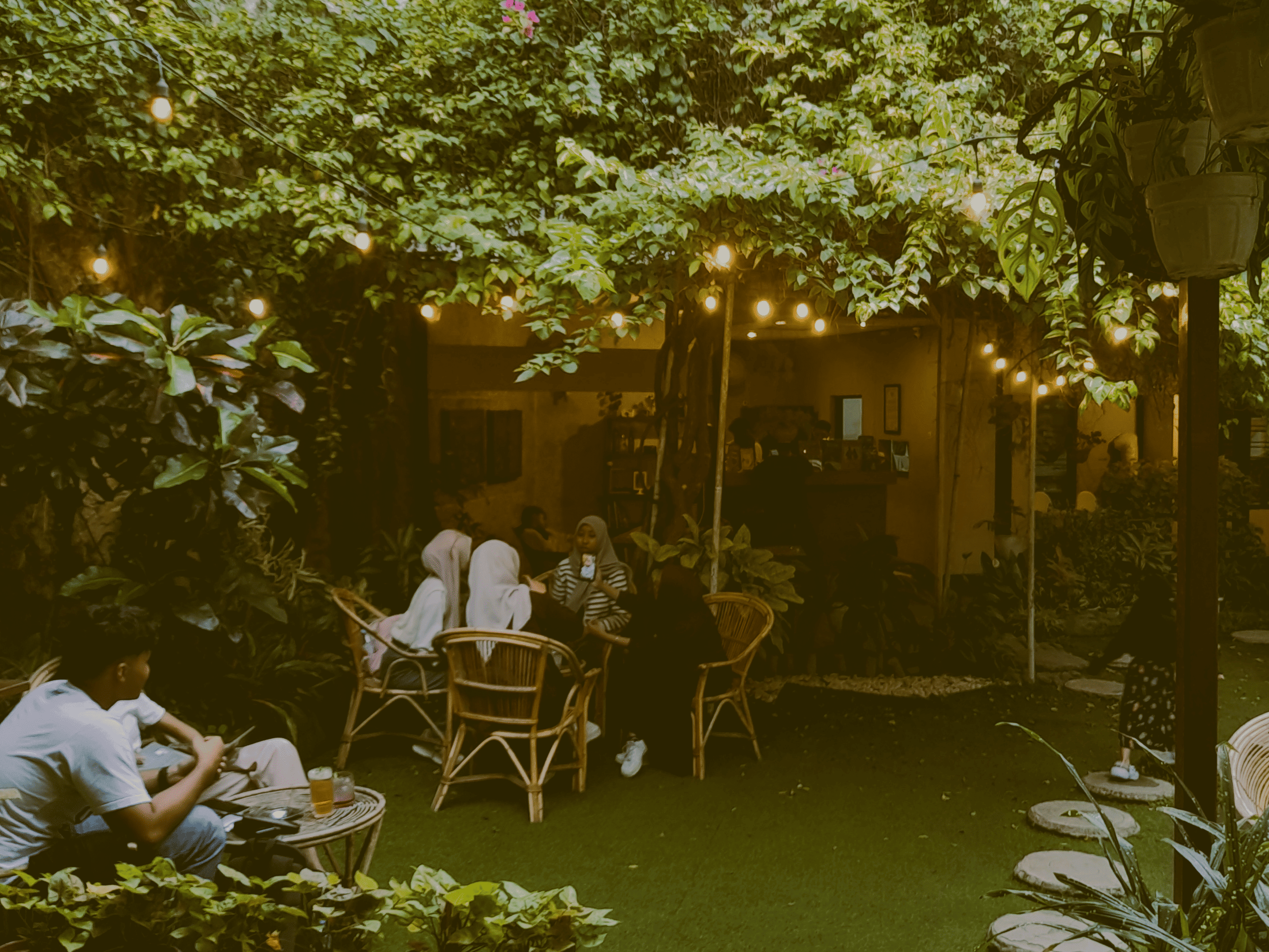
Calathea Garden, a cafe in Kampoeng Heritage Kajoetangan, Malang
We ordered iced coffee, an iced lemon tea, and tahu walik (all the food I ate is in this post!). Tahu walik is a snack from the Banyuwangi area of East Java, and it's a hollowed out tofu skin which is inverted and stuffed with meat filling and deep fried. It was so lovely and savoury, I'm wishing I could sink my teeth into one of them right now.
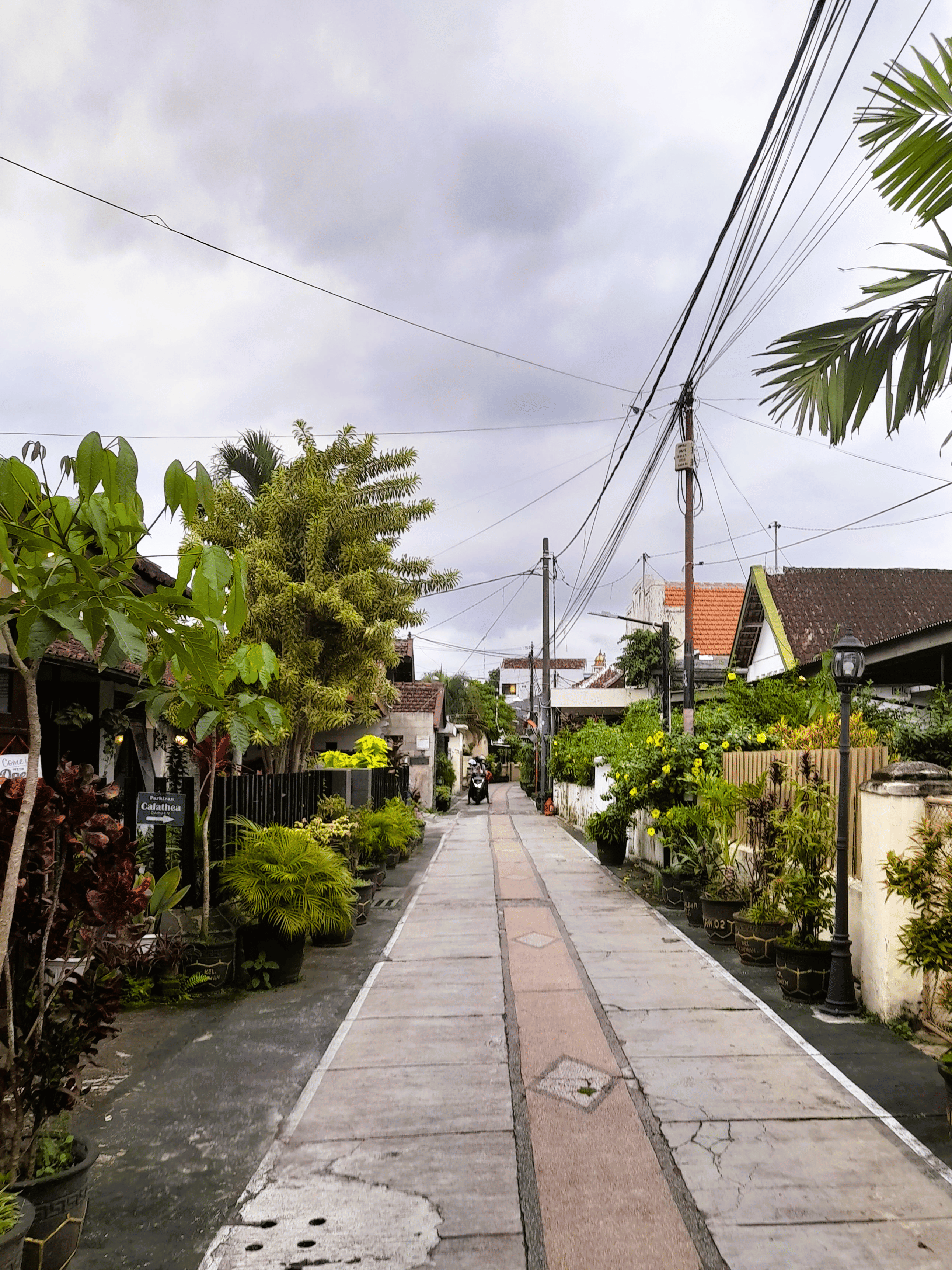
The street right outside of Calalthea Garden.
One of Kampung Kajoetangan's entrances lead directly onto Jl. Raya Gempol, what I'd describe as a bustling commercial strip, mostly filled with trendy, bespoke cafes, restaurants, and fashion stores. We walked along the street at night, sitting on a bench under a street lamp at the end of the road. Surrounded by the perpetual sound of mopeds and smoke of cigarettes, we sat, absorbing the lights, colours and energy around us.
That night, we had gone out to eat cwie mie, a savoury dry noodle dish with chicken mince from Malang. Chewing on the noodles reminded me of the first time I ate it, out of a green tupperware container brought from my aunt.
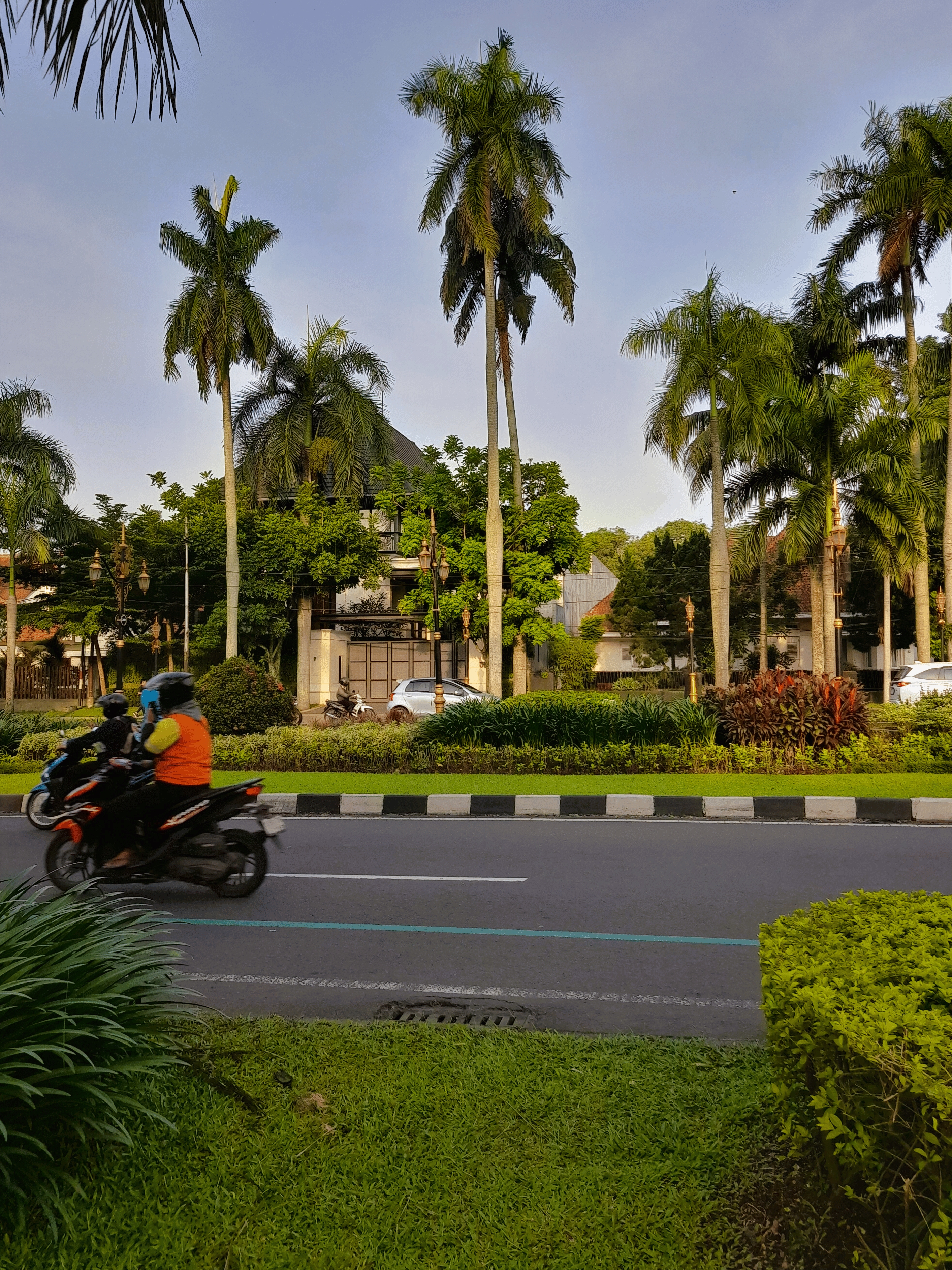
Idjen Boulevard is known for the colonial-era Dutch architecture and palm trees which line the road.
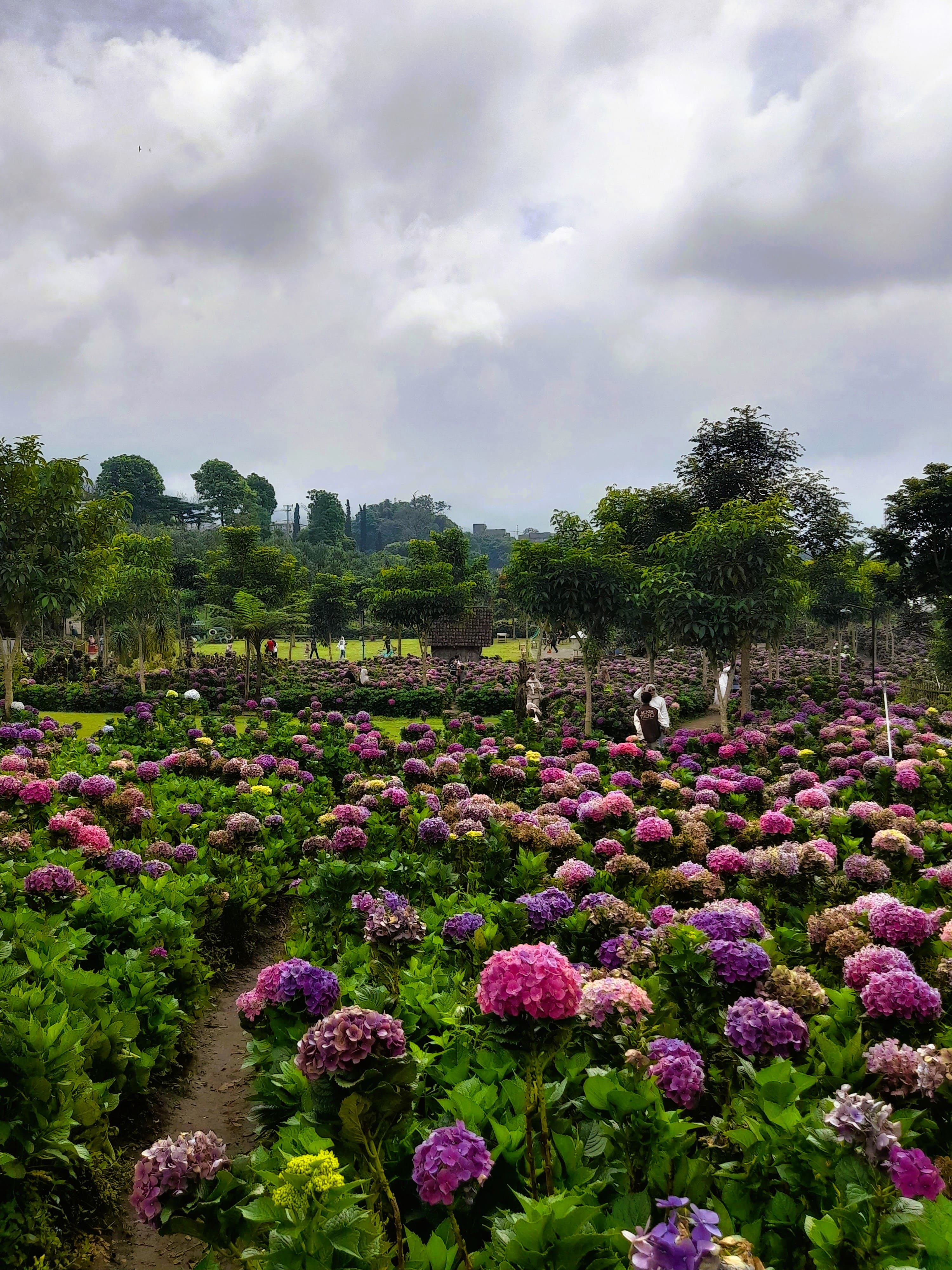
Outside the urban centre of Malang, most tourist attractions in the city are located in the mountainous locality of Batu, such as apple picking orchards, transportation/vehicle museums and flower gardens (pictured).
The remainder of our time in the city was spent between visiting scenic attractions in Batu and in the car, weaving through the city roads as Indonesian popular music played on the bluetooth speaker. Most tourist attractions were located outside the Malang CBD, and in the neighbouring city of Batu. These attractions were often located atop mountainous terrain, as the land was vacant and abundant further up.
Malang is where I sampled the majority of the new fruits I tried, as we had ordered rujak one day, a fruit salad (plus cucumber) with a spicy palm sugar sauce. Here's what I tried:
- Salak (Snakefruit) - Flavour is a mix of banana, apple and pineapple. Texture was a mix of crunch from an apple and a dry crumble like a hard chestnut.
- Kedondong (Ambarella) - Crunchy like an apple, only more on the harder side. Very sour and acidic. Was told that it's commonly eaten in pregnancy.
- Jambu air (Java apple/rose apple) - Mild, refreshing, tastes like rose-infused water. Texture is similar to Nashi pear, but a bit more Styrofoam like (questionable description). Outer skin has a very satisfying crunch.
- Jambu biji (Pink guava) - Texture of an overripe Packham pear, taste is similar. Outer green skin is more tough, but this makes it satisfying to eat.
- Bangkuang (Jicama) - Like a less sweet and more dense Nashi pear. Very refreshing and juicy.
- Rambutan - Less fruity and watery than lychee and longan, and a richer type of sweetness as opposed to a lighter lychee/longan.
Yogyakarta, Jawa Tengah
Colloquially referred to as Jogja, the city is known as the cultural capital of Java. Although I only spent a few days in the city, I captured some of my most gorgeous sky shots here.
We visited the Fort Vredeburg Museum, which had detailed dioramas depicting events which happened in the city while Indonesia was fighting for independence from the Dutch.
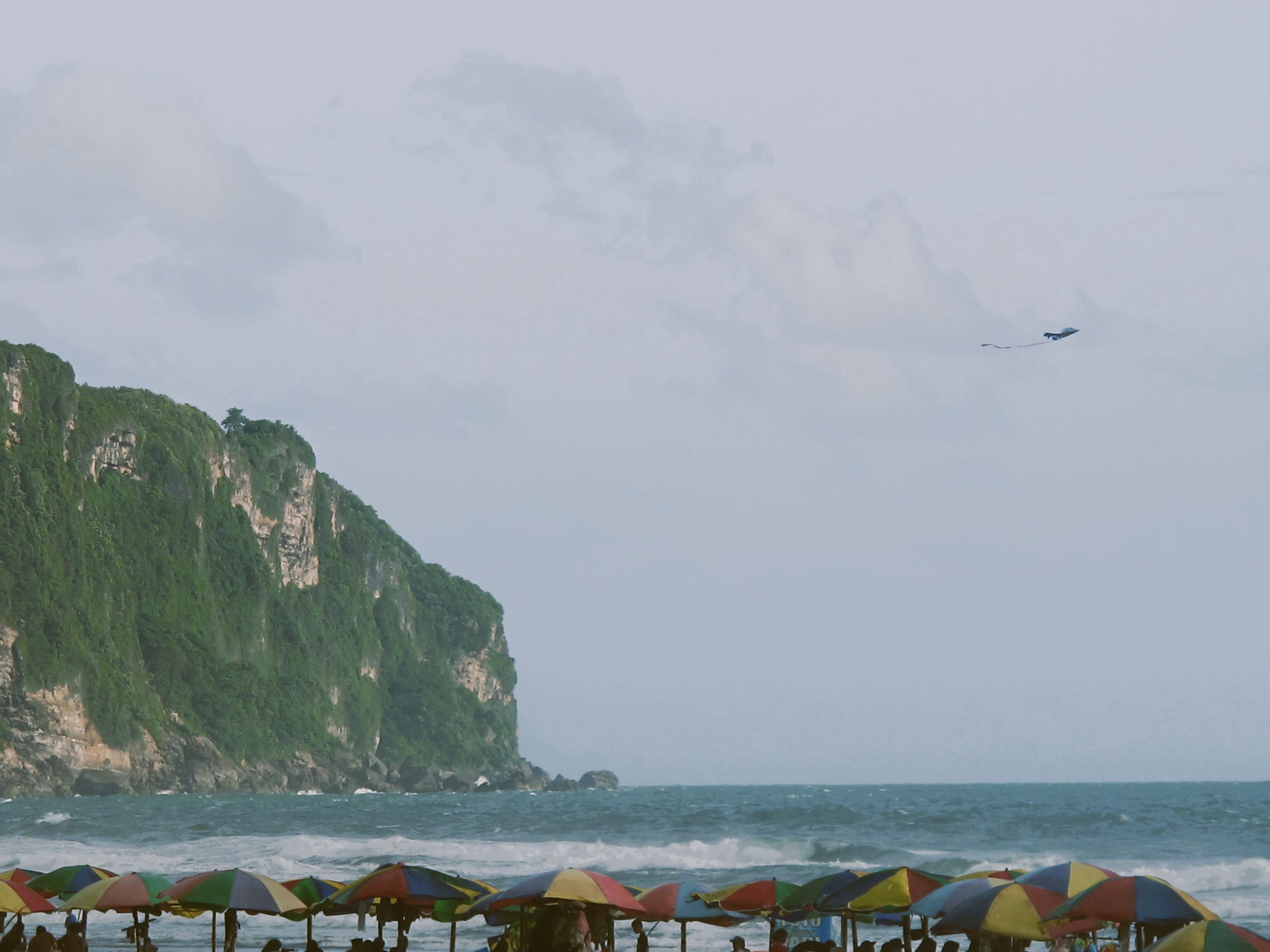
Pantai Parangtritis, Special Region of Yogyakarta
Travelling to the south of the city meant that we were able to visit beaches, namely Pantai Parangtritis (pictured above) and Pantai Parangendog.
In the opposite direction, we had also headed north to climb one of Jogja's most famous temples, Candi Borobudur. I do not have any photos as I wanted to be fully present during the tour and climb, but it was also really damn hot. I was so busy trying to keep cool that the idea of taking any photos was absurd. The sun was vicious that day, and I got quite the sunburn. Climbing the very steep stairs was very fun though!
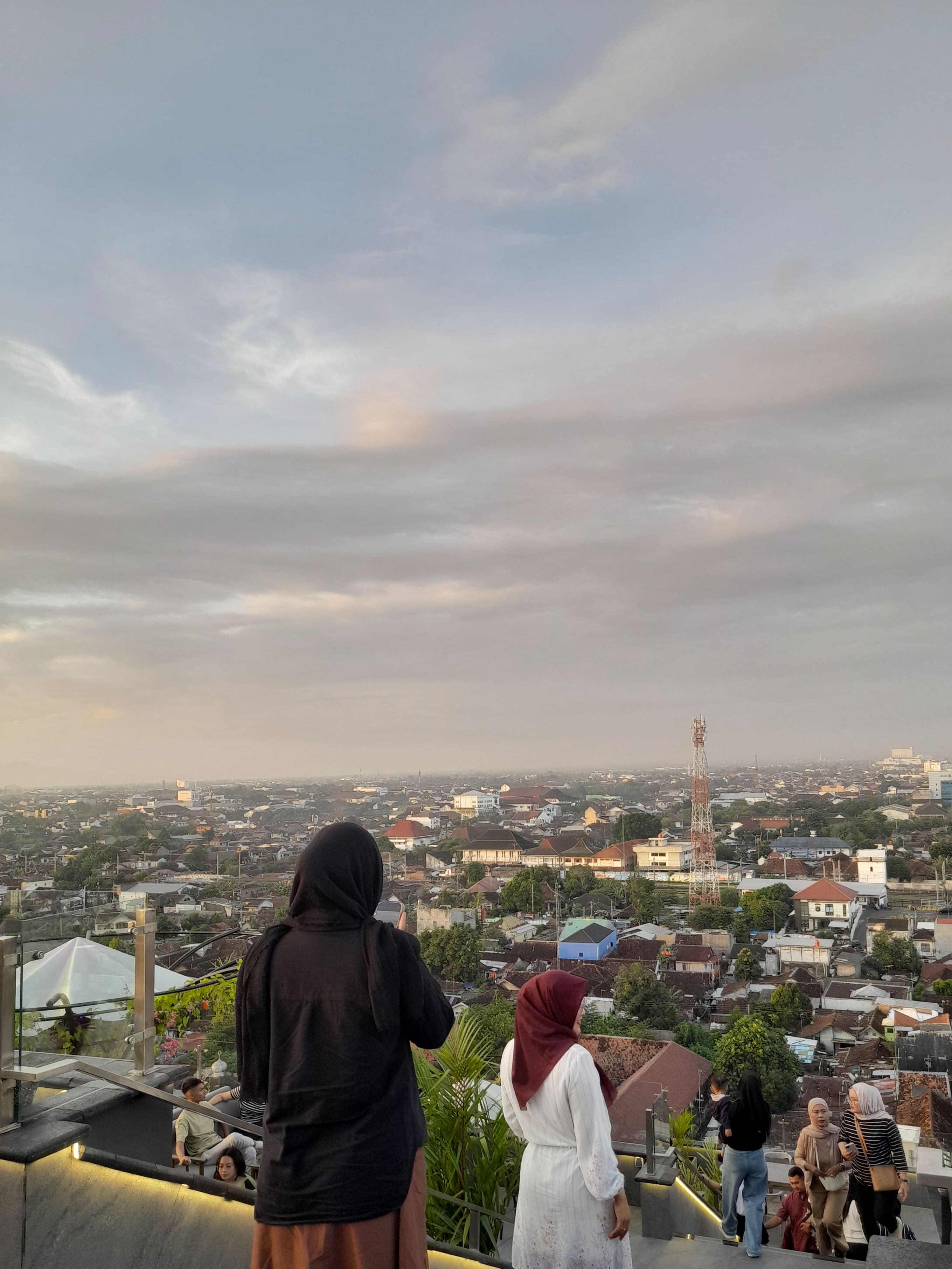
Views of the surrounding area from a rooftop restaurant.
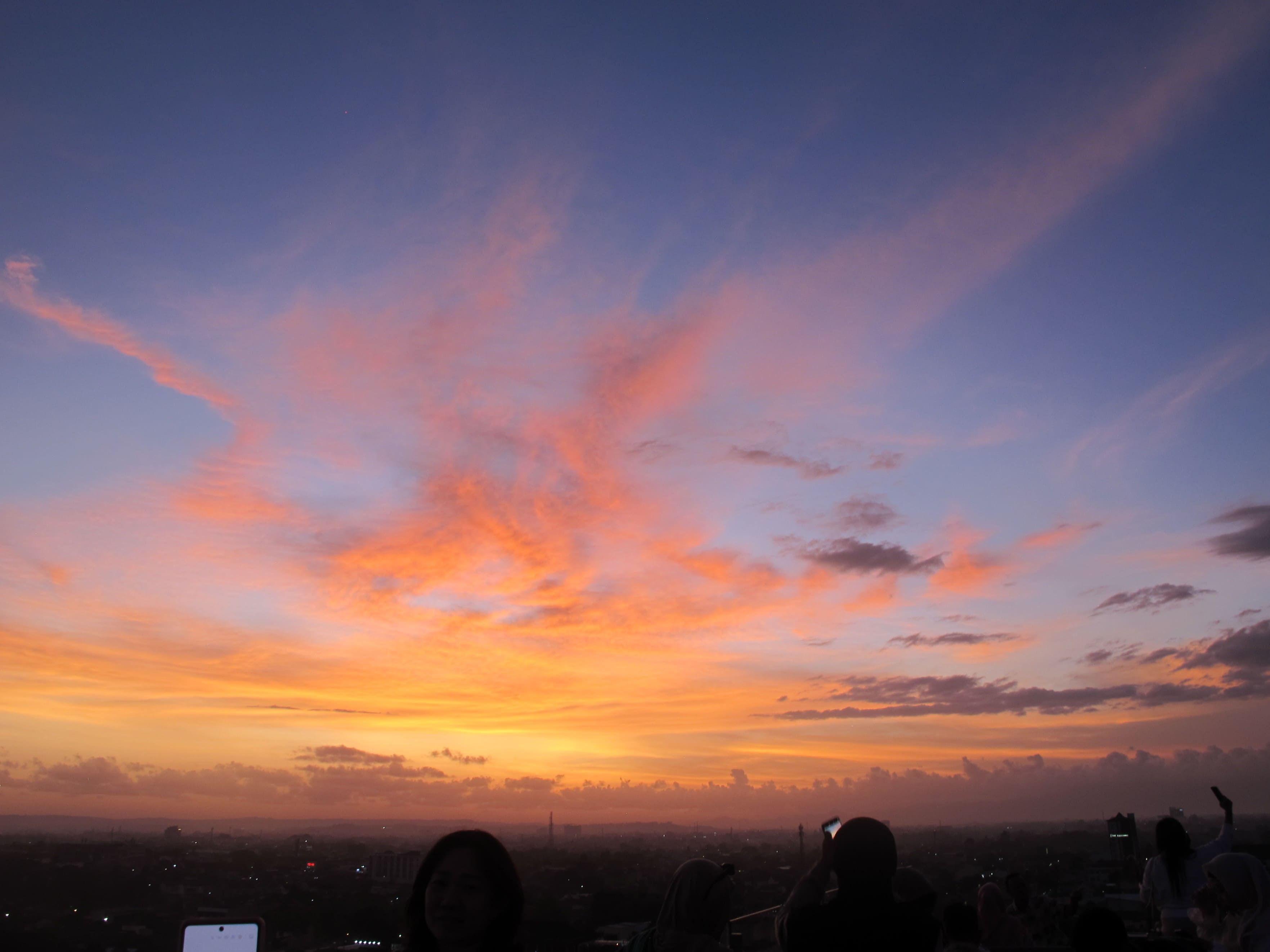
A rooftop sunset captured in Jogja.
Before leaving Jogja, we visited Jl. Malioboro to purchase souvenirs, or oleh-oleh. At my aunt's request, we also purchased boxes of bakpia pathok and roti gulung abon sapi to bring to Jakarta. Bakpia is a snack of Chinese origin - a small, round puff pastry traditionally filled with mung bean paste. Popular contemporary varieties include chocolate and cheese. Roti gulung abon sapi is a beef floss roll, the bread having an almost spongy texture.
Jogja was also where I tried gudeg, or young jackfruit stewed in palm sugar and coconut milk. It is served with rice, fried tofu, hard boiled eggs, tempeh, beef skin, and chicken, all in a dark, sweet stew. So good...
Jakarta, Jawa Barat
Most of my time in Jakarta was spent with family, eating food I haven't had since I last visited, and just exploring the CBD. This visit was for the small things - stray cats waltzing into my aunt's house and making itself at home as my cousins pet them, waking up to the sound of Fajr at 5am, being a bit too frequent of a patron at Indomaret, and all the times I laughed with family.
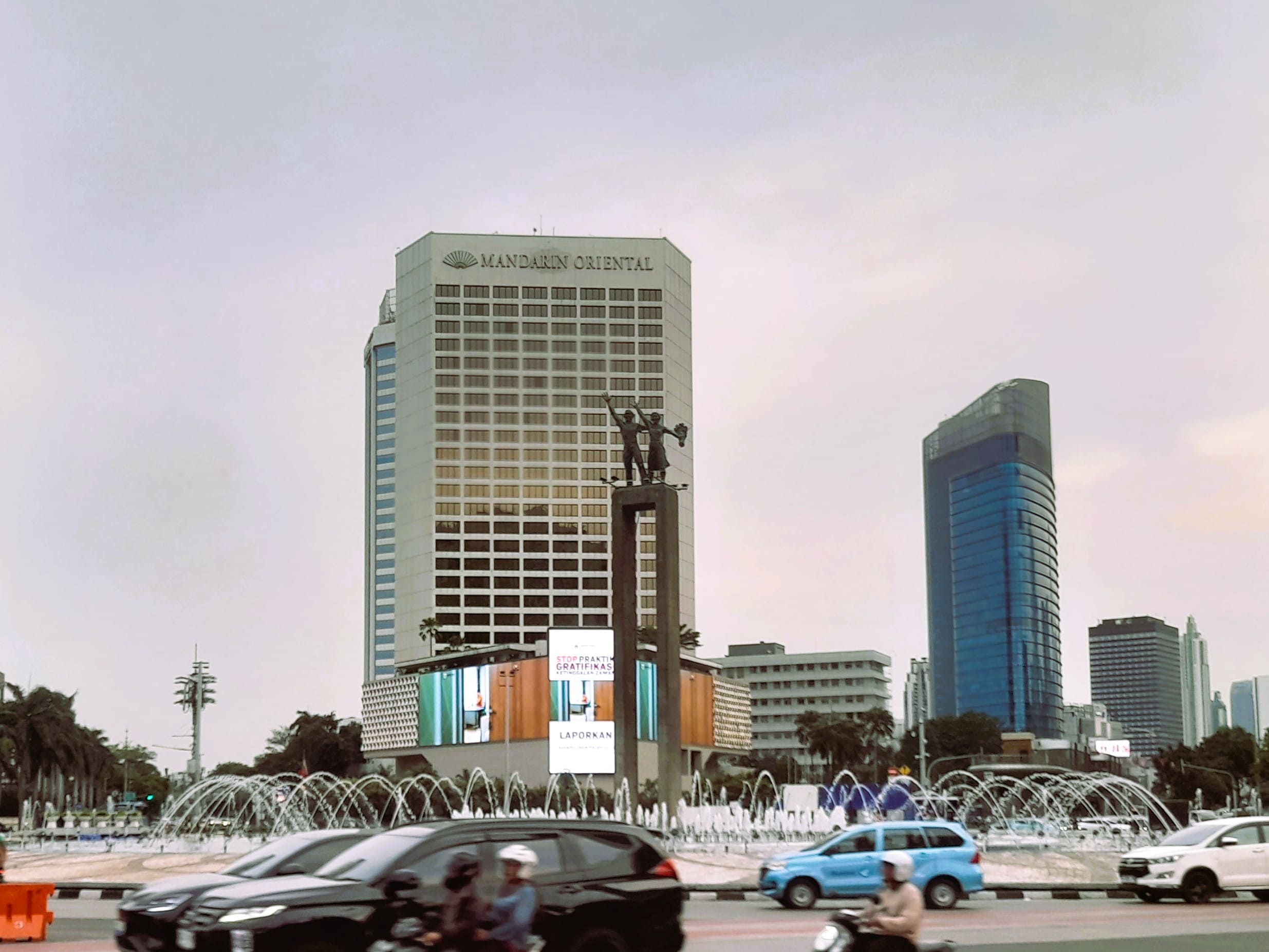
Selamat Datang Monument, Menteng, Central Jakarta
In Jakarta, I spent a hell of a lot of time in bookstores, and these were some popular titles which caught my eye:
- Laut Bercerita (The Sea Speaks His Name) - Leila S. Chudori
- Ronggeng Dukuh Paruk (The Dancer) - Ahmad Tohari
- Cantik Itu Luka (Beauty is a Wound) - Eka Kurniawan
- All That Is Gone - Pramoedya Ananta Toer
- The Longing - Alberta Natasia Adji
"The tragic yet inspiring story of a group of friends, all young and idealistic political activists who faced the iron fist of power in the waning days of the Suharto regime, in the late 1990s."
"Set in the tumultuous days of the mid 1960s, "The Dancer" describes a village community struggling to adapt to a rapidly changing world. It also provides readers with a ground-level view of the political turmoil and human tragedy leading up to and following the abortive Communist coup. This trilogy of novels traces the lives of two characters: Srintil, a dancer whose unwitting involvement with the region's leftist propaganda machine sets her at odds with Rasus, the love of her life who embraces Islam and finds a career in the army."
"Across generations, the beautiful Indo prostitute Dewi Ayu, her daughters, and her grandchildren are beset by incest, murder, bestiality, rape, and the often fiercely vengeful undead. Kurniawan mixes tender lyricism and gleefully grotesque hyperbole to offer entertainment of a rare order as well as a scathing critique of his young nation’s troubled past: the rapacious offhand greed of colonialism; the chaotic struggle for independence; the 1965 mass murders of perhaps a million “communists,” followed by three decades of Suharto’s despotic rule."
"...draws from the author’s own experiences in Indonesia to depict characters trying to make sense of a war-torn culture haunted by colonialism, among them an eight-year-old girl soon to be married off by her parents for money and an idealistic young soldier who witnesses the savage beating of a man accused of being a spy."
"Three generations of Chinese-Indonesian women navigate abuse, cultural identity, and political upheaval from the 1950s through the 1998 riots in Indonesia."
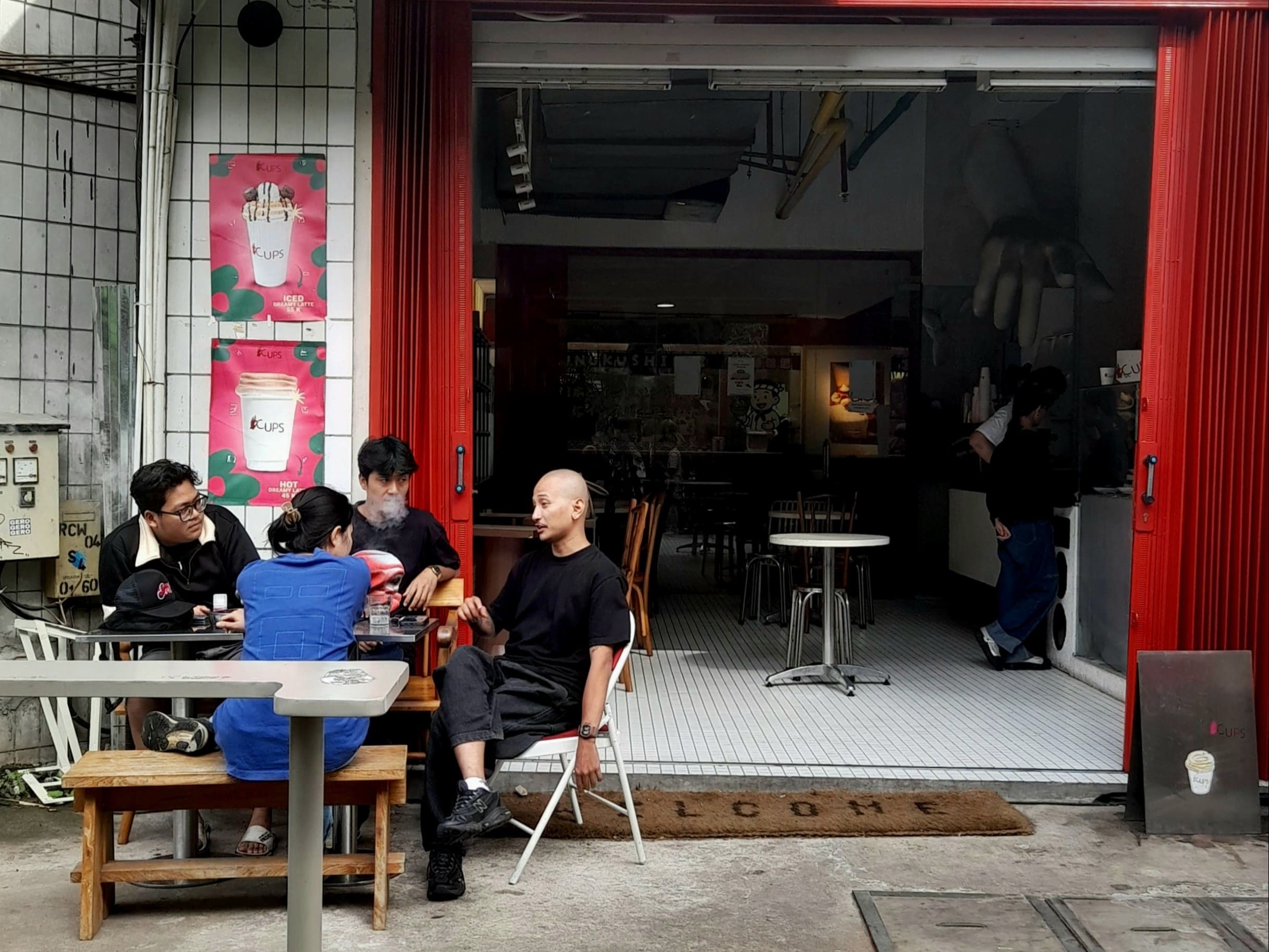
Jakarta's trendy commercial district is characterised by viral eateries and a youthful atmosphere. Blok M, Kebayoran Baru, Jaksel.
Blok M is a very trendy area in the Jakarta CBD, comprising of cafes, eateries, and clothing stores. But the most memorable building in the district was Blok M Square, an older mall. Specifically the basement level.
Shops with walls of CDs and vinyls, rows of bookstores where tall stacks of second hand books would occupy the walkway and create a mosaic of cover spines, as well as entire sections of tailors working under yellow lights, surrounded by colourful spools of thread. On a higher level was a play centre the size of a food court intended for children as their parents shopped. There was a skating rink, 3m wide rainbow toboggan slide, and those ridiculous (I love them) spinning coconut trees. Needless to say, my inner child was still captivated by all the colours and lights.
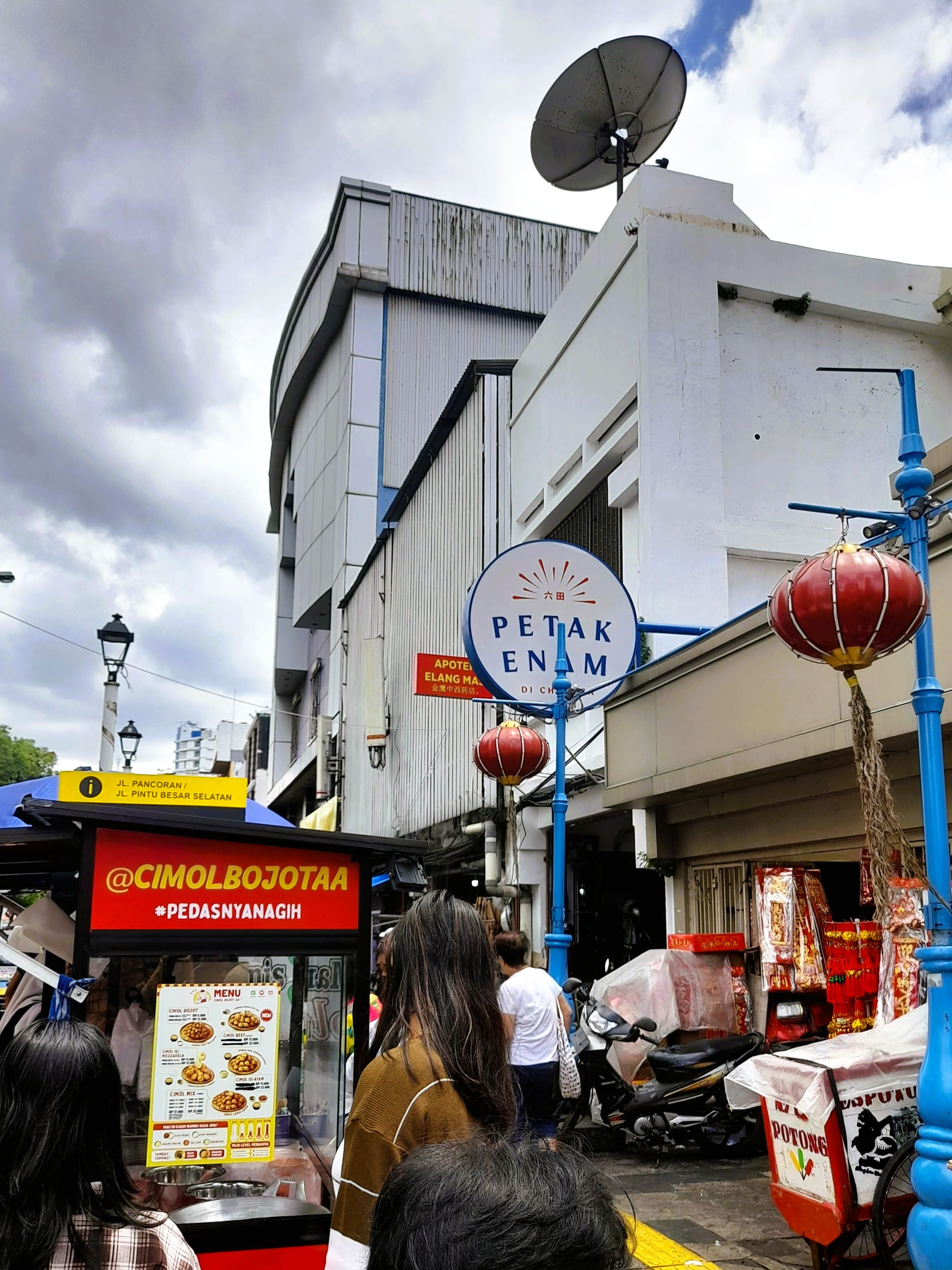
Petak Enam is a shopping complex full of food vendors and businesses run by the ethnic Chinese community in Jakarta, located in Glodok.
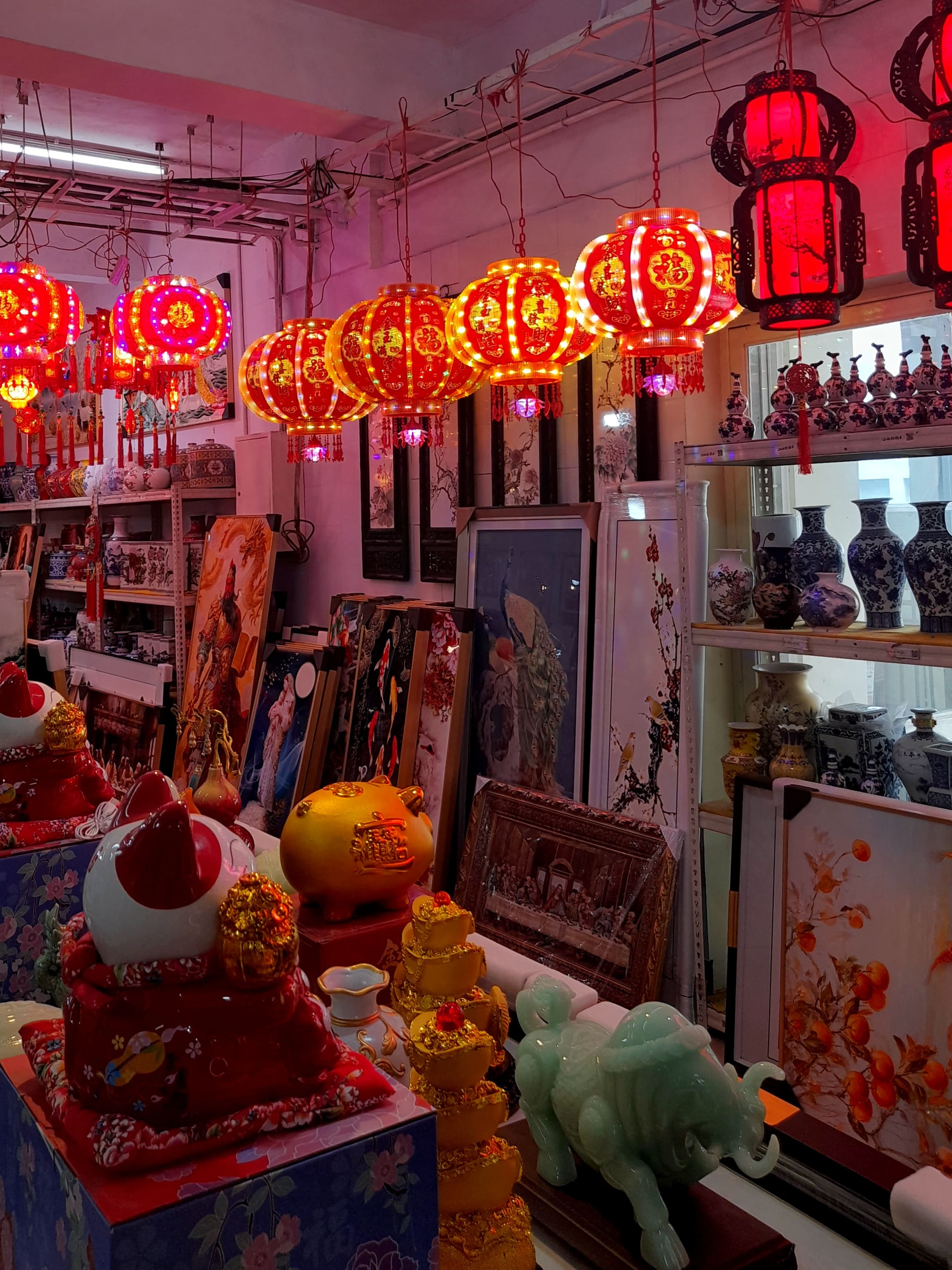
Inside a bric-o-brac store in Petak Enam, full of traditional vases, crockery, paintings, and ornaments.
On another day, we went to Petak Enam, a market in Jakarta's Chinatown, Glodok. I always find these buildings fascinating, not only because they retain the charm of being older buildings, but because of how the buildings resemble mazes: stores tucked away in the corners, a myriad of items on shelves for sale; different scenes of life playing out simultaneously under white lights; the scent of food vendors and incessant banter.
Specific to Petak Enam was an abundance of watch repair shops and jewellery wholesalers, food stalls selling non-halal items. My favourite corner was up a flight of stairs into a white building where the signature "Petak Enam di Chandra" signage looked out onto the sheltered compound of eateries below. When you entered, there was an antiques shop to your right (pictured above). To your left, as you walked down the corridor, you could see a cafe. Away from the crowds outside, it was dimly lit, had chairs covered in clear plastic, and several patrons inside. Although there were no windows looking outside, there were windows separating the shop from the corridor, giving it the appearance of a fish tank because of the slightly green light.
Singapore / 新加坡 / Singapura / சிங்கப்பூர்
Amidst rapid urbanisation, pockets of a slower life are still tucked away in the neighbourhoods of Singapore. Being able to spend time with my extended family and do mundane things like grocery shopping or sitting and talking will always be a greater treat than staying in the nicest hotels that the island has to offer.
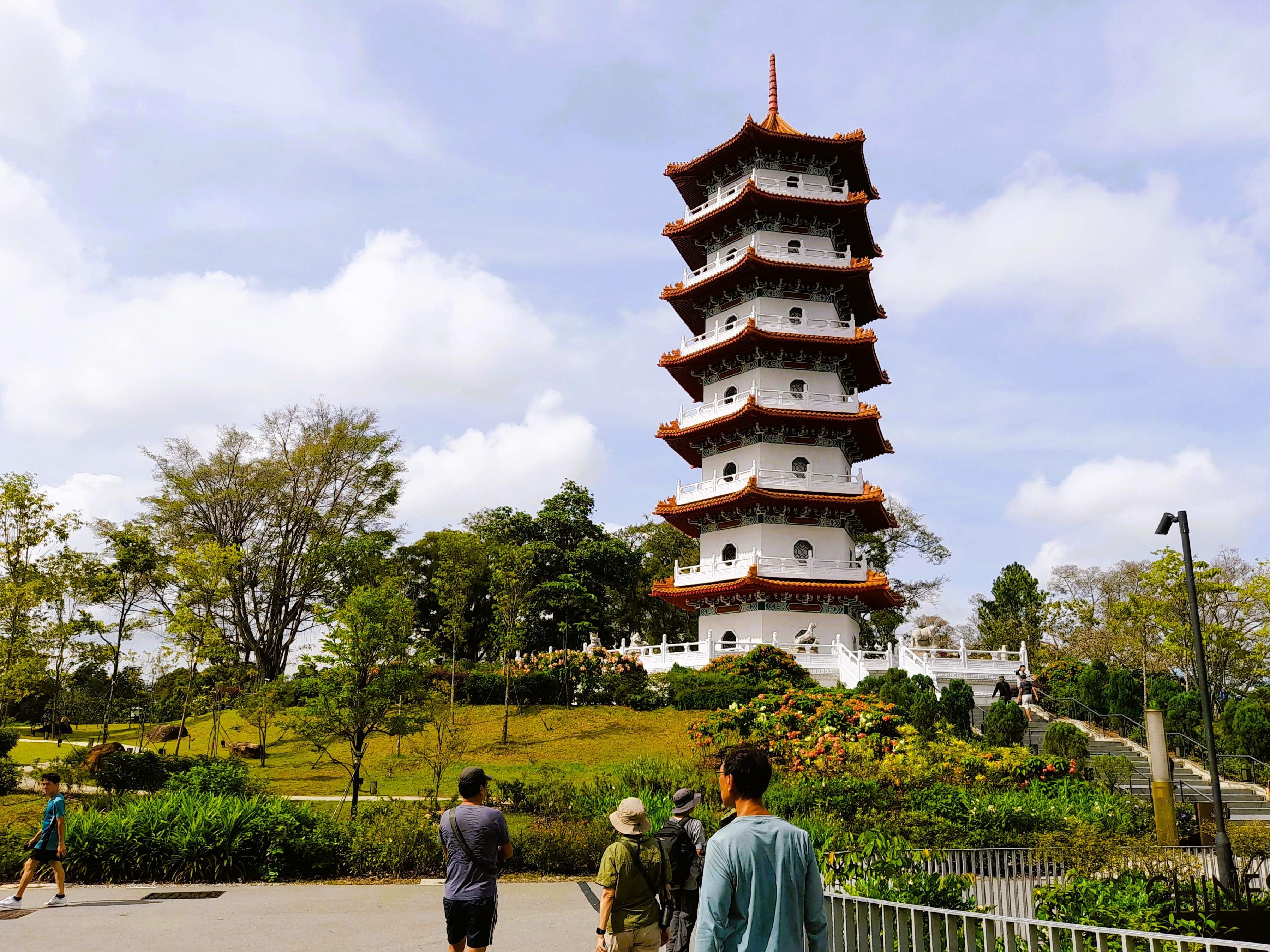
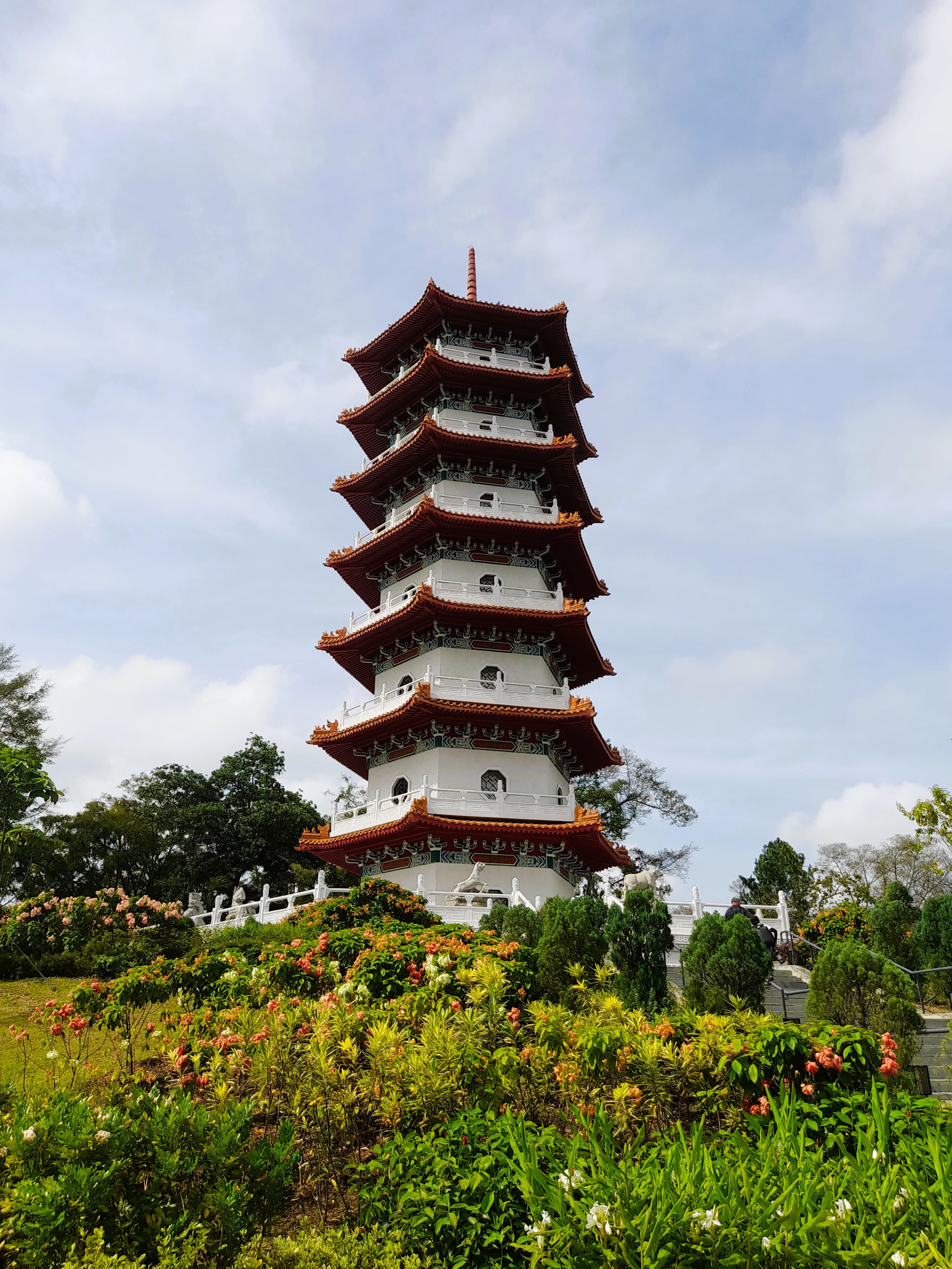
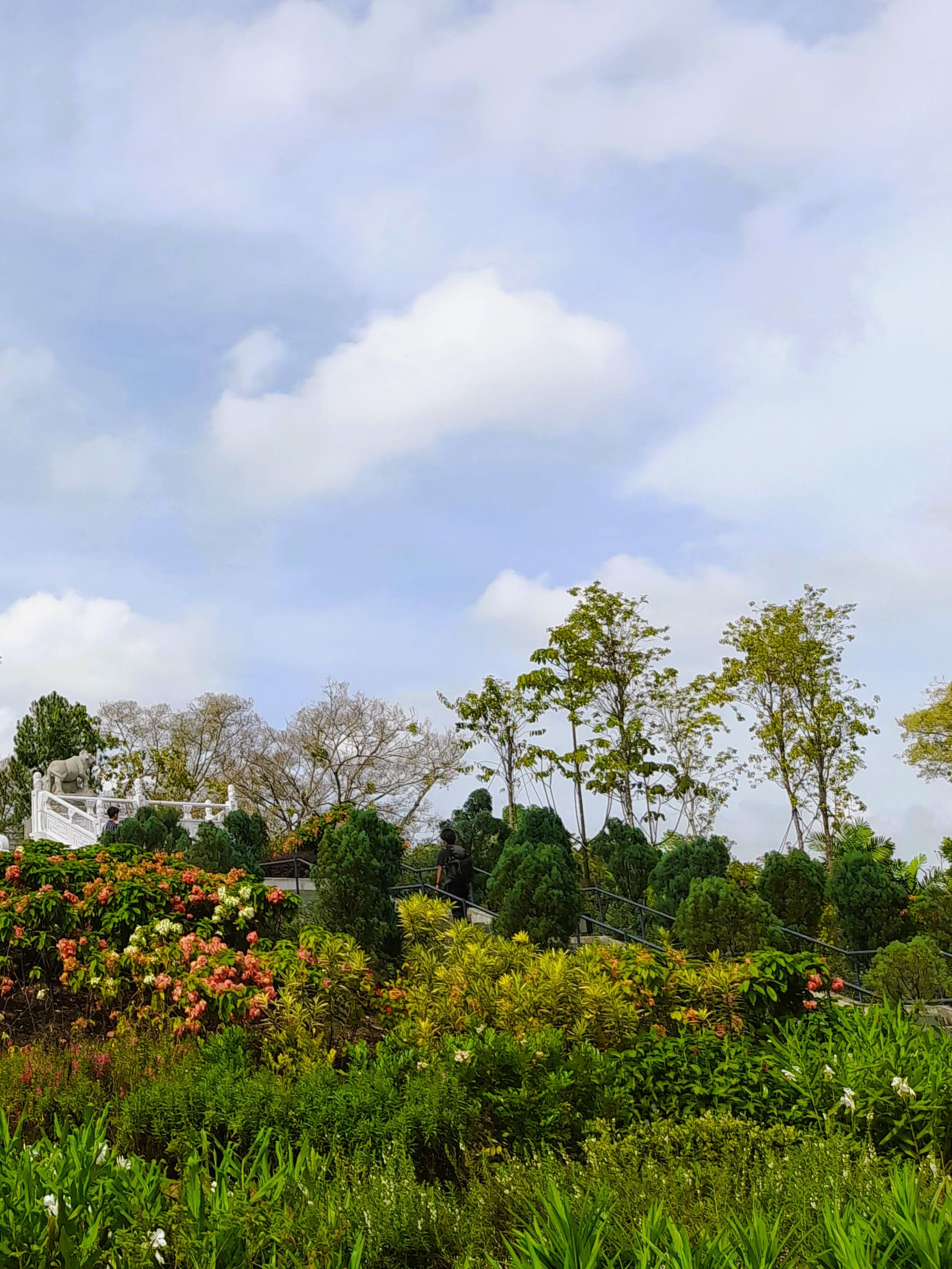
Cloud Pagoda at Chinese Gardens, Jurong East.
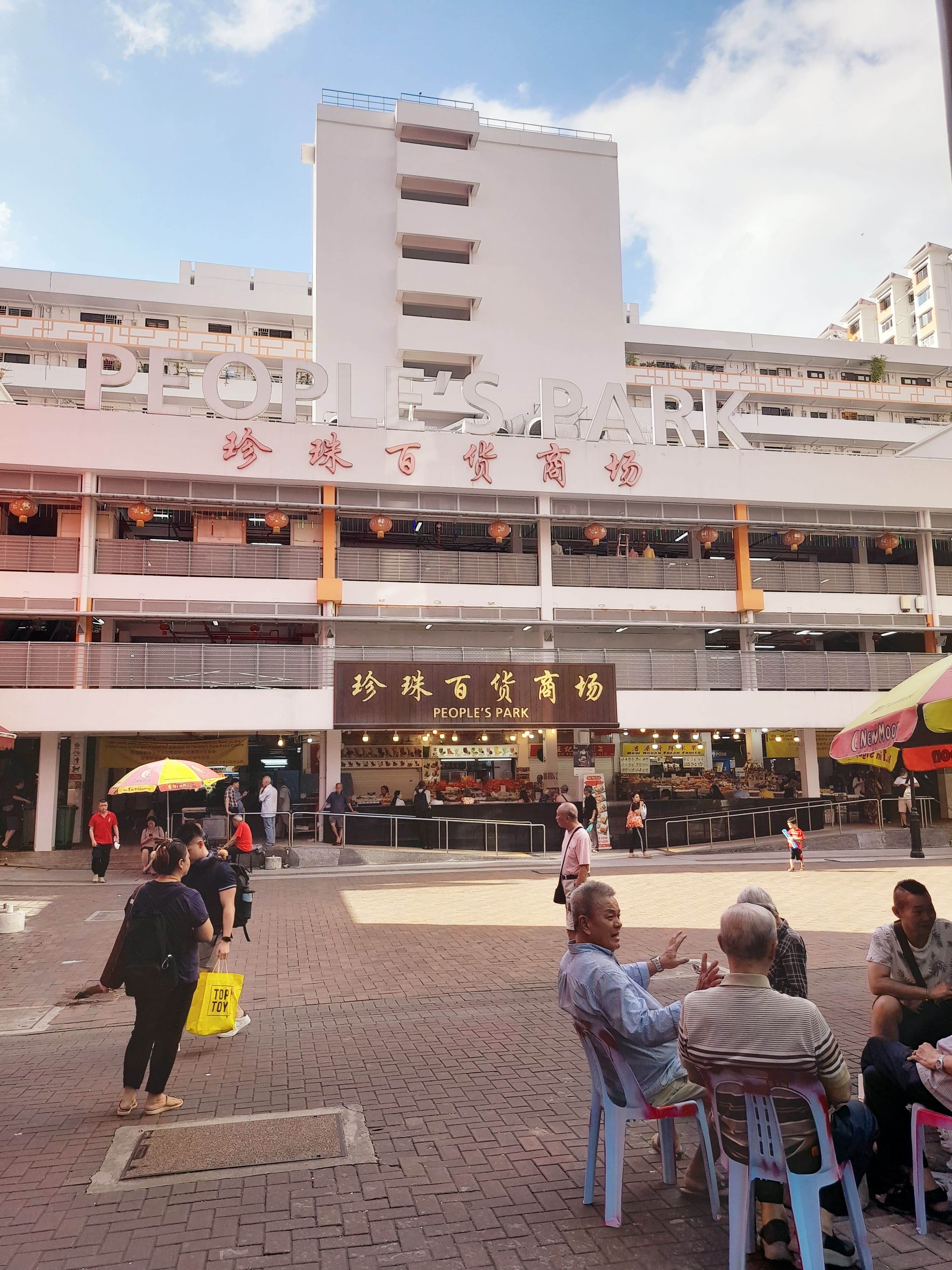
A group of uncles banter next to a traditional newspaper stand. People's Park Complex, Chinatown.
Coins jangled as they were quickly exchanged for Chinese newspapers in front of the Chinatown MRT. To the right, an OG department store. To the left, the entrance of People's Complex, surrounded by grocers, and ample snack stalls. Straight ahead (pictured) was the hawker centre. Going up to the 2nd and 3rd floors will find you among tailors and clothing stores, selling a range of cheongsams, Peranakan kebayas, and contemporary styles.
The People's Complex design is a blast to the past. The building is full of a specific combination of mobile repair shops, travel agencies, massage parlours, and jewellery pawn shops. In regard to the massage stores in People's Complex, allow me to diverge for a brief moment to the Bugis Street mall. An honourable mention to the 3rd floor, comprised entirely of nail salons and personal care services. The rows are lit up in pinks and blues as the salons are wall to wall. I find it to be an uncanny and beautiful sight.
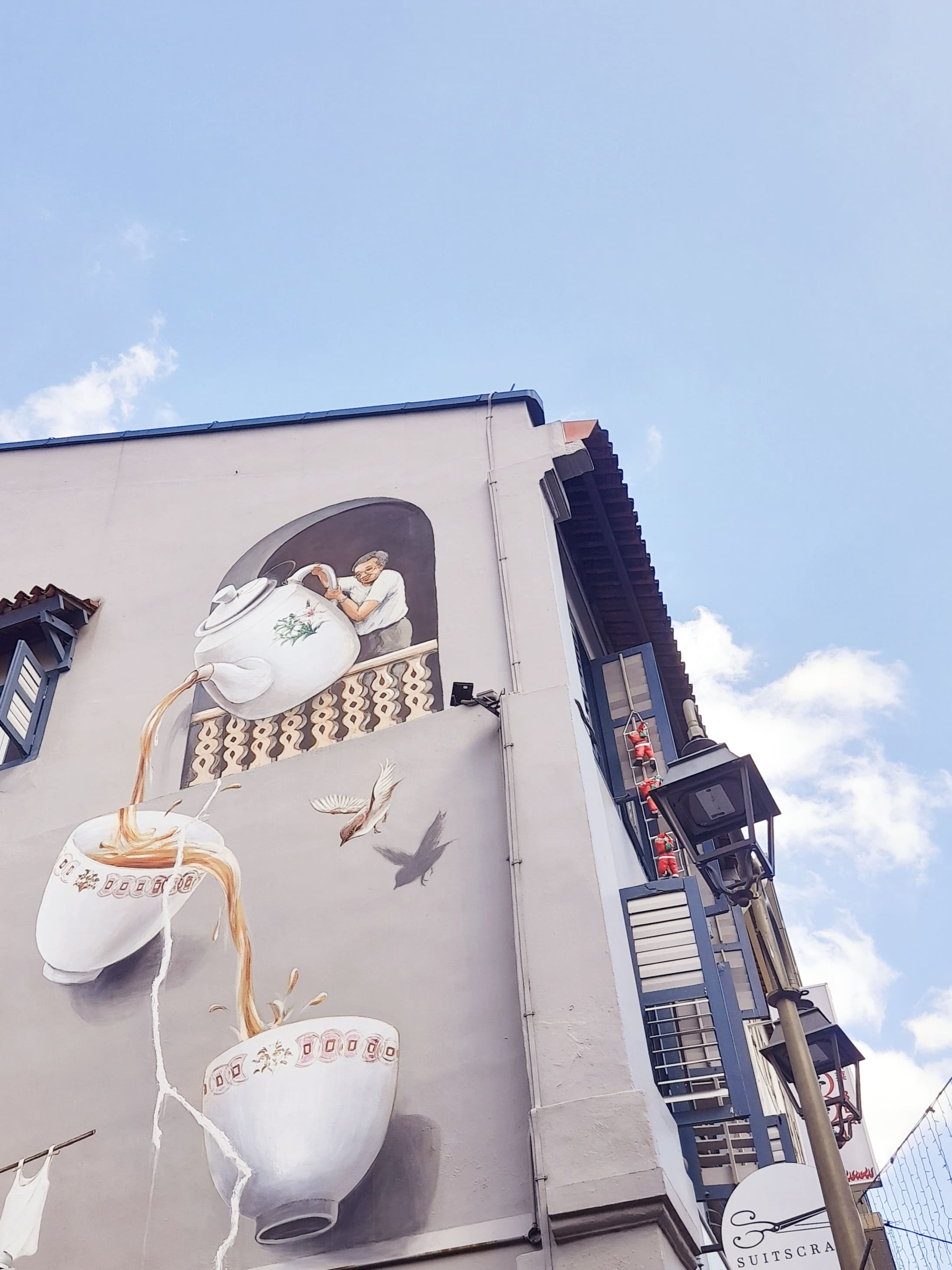
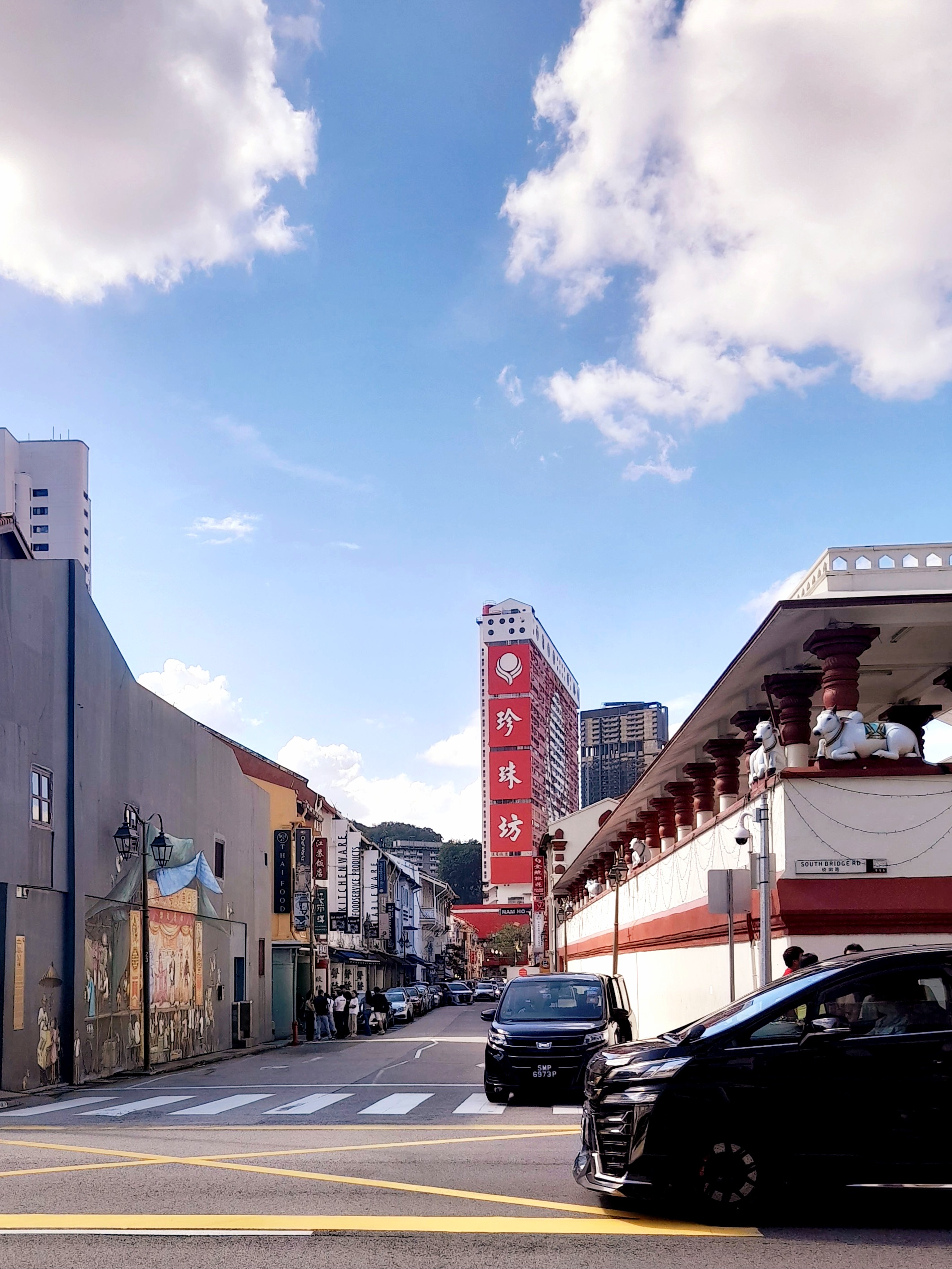
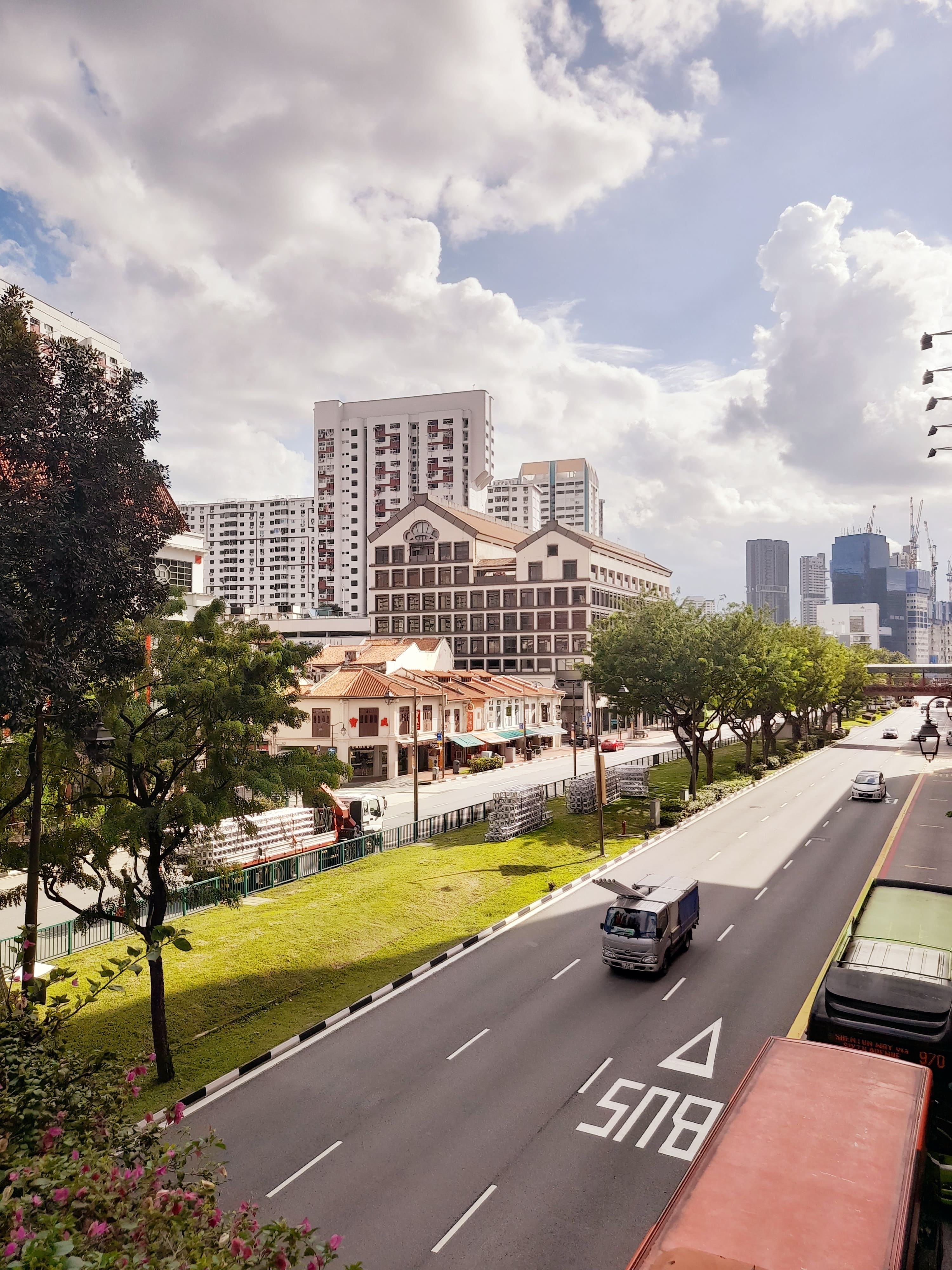
Heritage shophouses stand in contrast to modern infrastructure in Singapore's Chinatown.
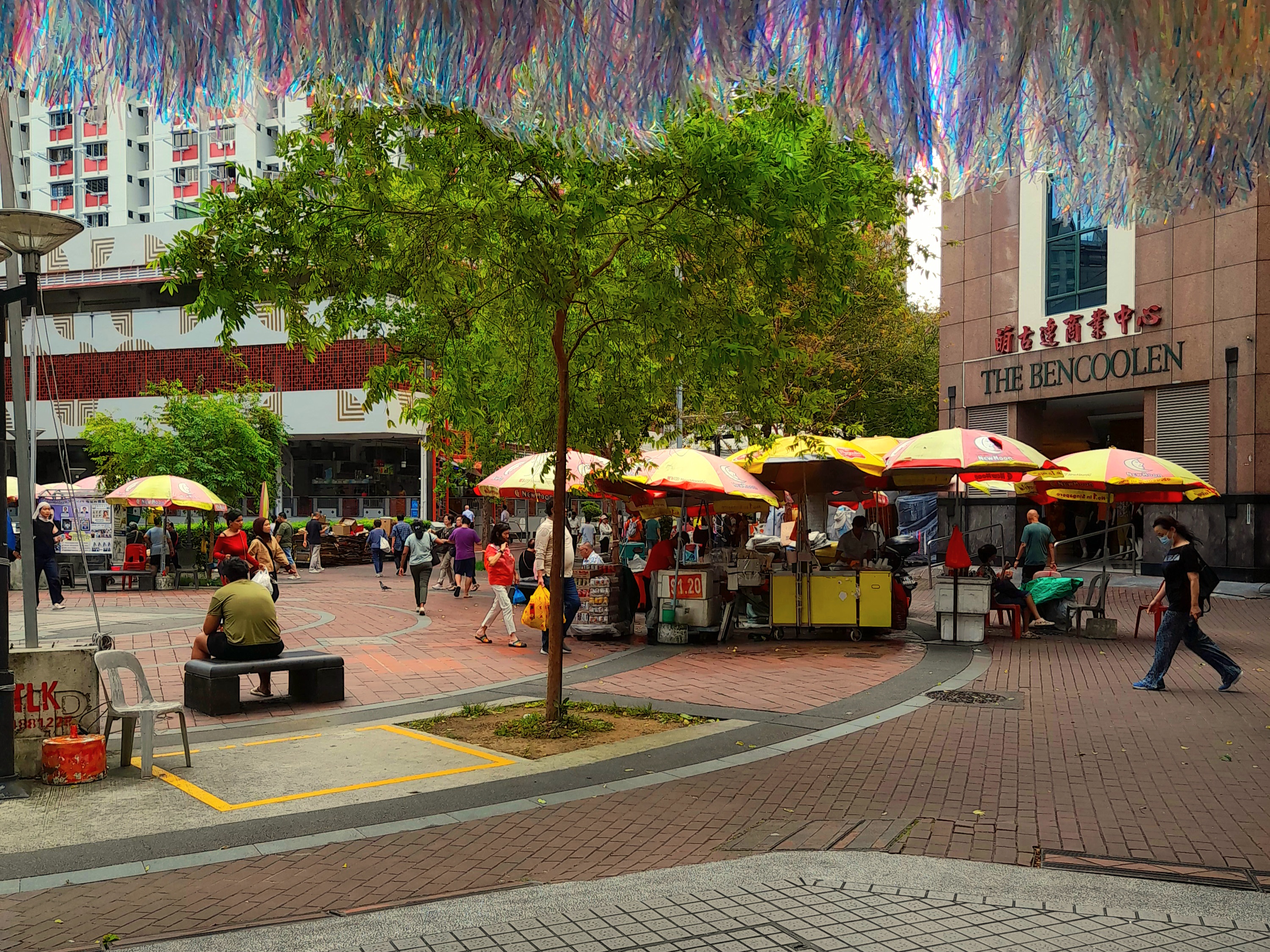
Under the abundance of red and yellow New Moon parasols is the ice cream vendor where I bought my ais potong.
I finally got to try ais ("ais" in previously British Malaysia and Singapore, but "es" in previously Dutch Indonesia. Colonialism!) potong, which is essentially the Singapore version of an ice cream sandwich. The ice cream was a sweet vanilla with raspberry, tangy and fruity, in a hearty block between the wafers. I got to try it with a wafer, but I'm still dying to eat one with the rainbow swirled bread.
Let me go on a bread spiel. I have a special affinity for the Malaysian bread brand, Gardenia, specifically the Hokkaido milk bread flavour and the wholemeal toast. I would put blueberry jam on either, and pork floss or fried eggs on the latter whenever I'd visit my grandparents' house. I have still never tried their pandan flavoured bread. Pandan cake is so nice...both the chiffon type and the swirl cake with cream. Adding pandan leaves when cooking bubur kacang hijau (mung bean pudding with coconut milk and brown sugar as well) is also excellent.
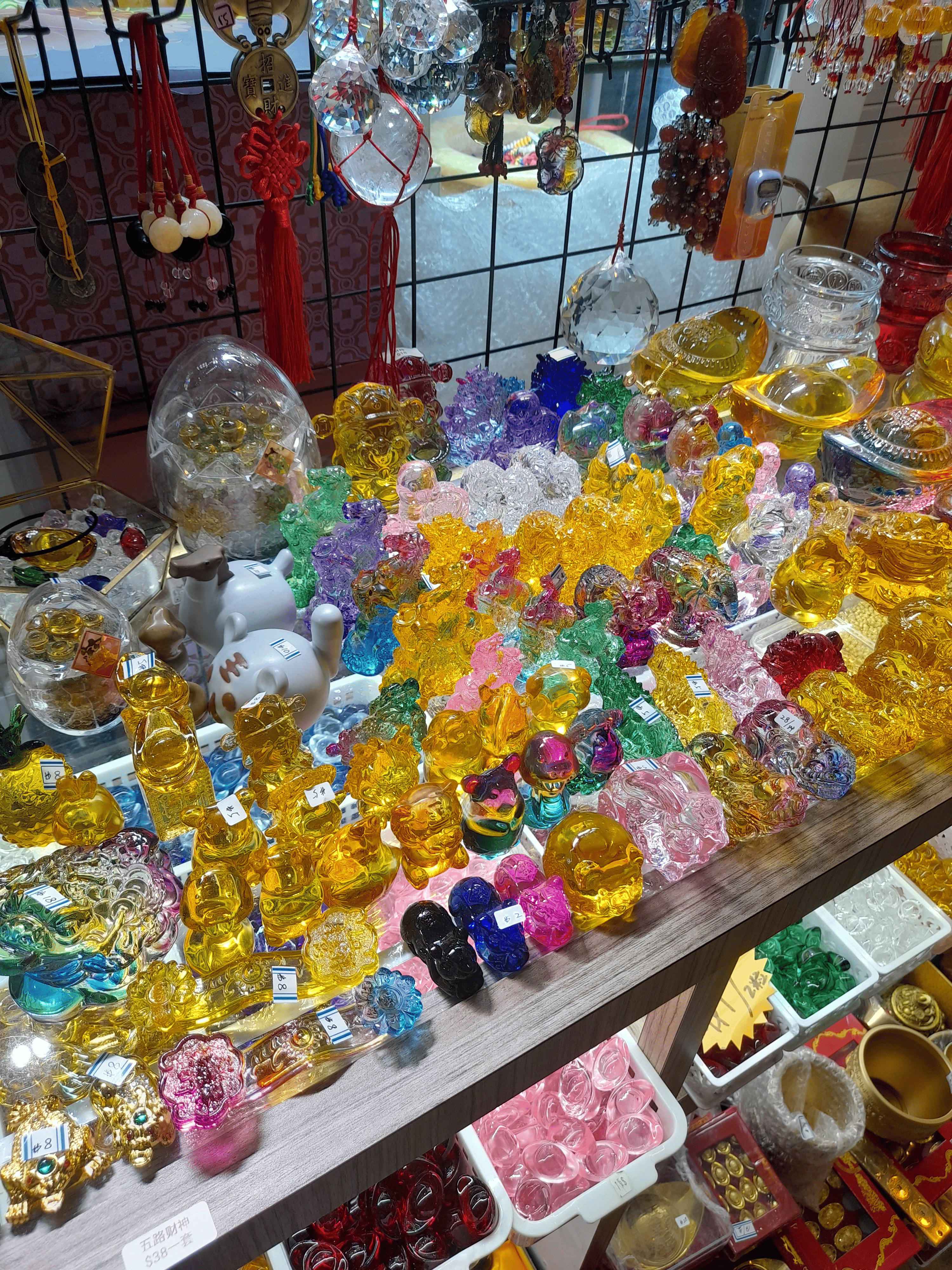
Shiny, shiny.
Behind the ais potong cart is The Bencoolen shopping complex. My favourite shop is definitely the Chinese herbal shop. Plastic bags of birds nest, ginseng, nuts, dried fruit and seafood, and herbal medicine. Love the scent.
There was another store (pictured above) with gorgeous (but probably mass produced) glass trinkets. Damn, I should've bought a rainbow prosperity horse.
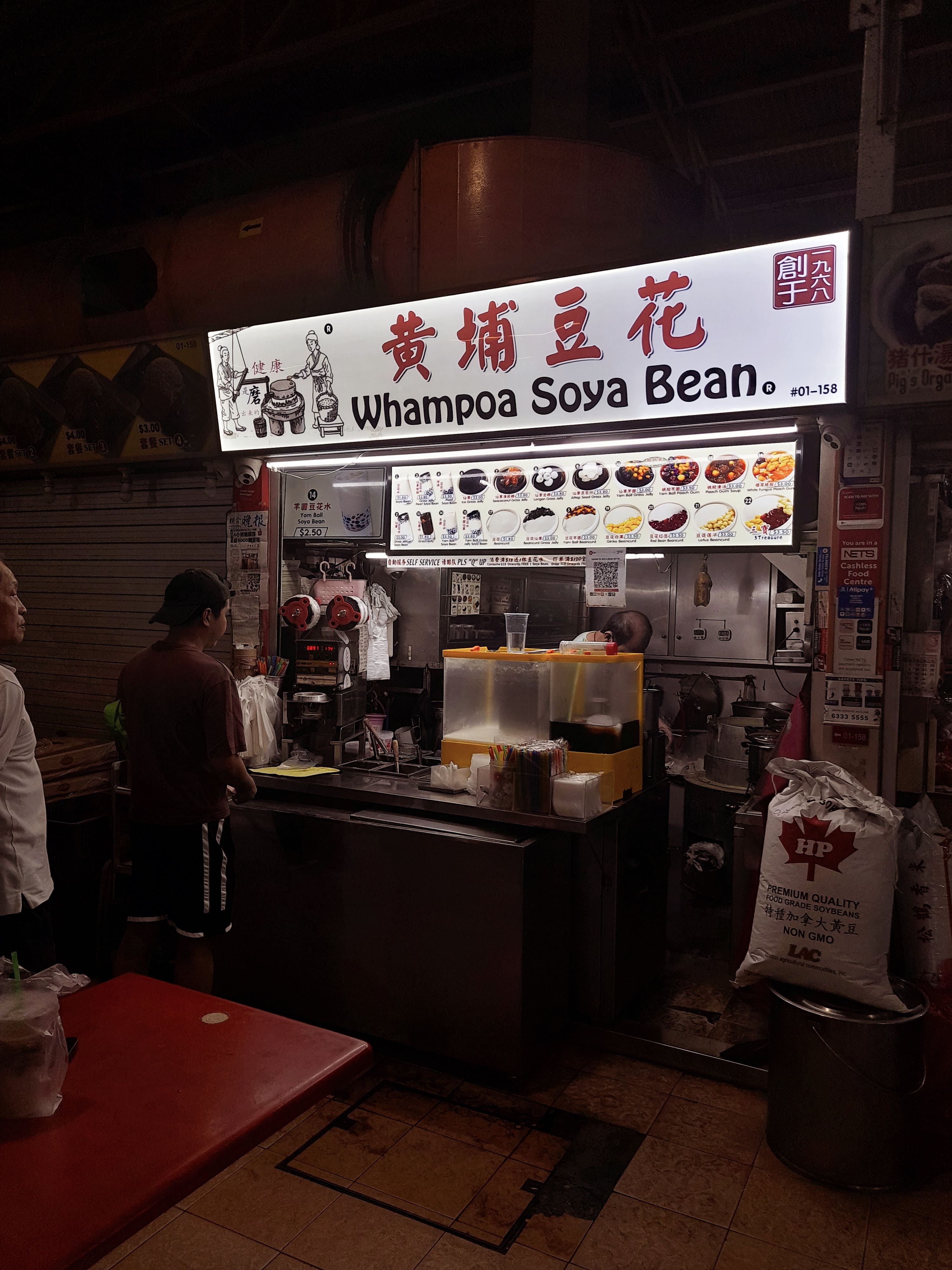
A chain soybean drinks and desserts stall in a hawker centre, selling favourites such as dou nai (soy milk) and dou hua (beancurd pudding) from $1.80.
In order to eat the dishes I wanted from the hawker centre, I had to put myself through several humiliation rituals - attempting to order with my shitty, barely-there Chinese. I used to be able to speak Mandarin as a child, but like many, lost the language as I got older. Going to school in an English-speaking context was one factor, but having a hatred for the language as child due to feeling "other" didn't help. I was so sure that I would never need Chinese as an adult.
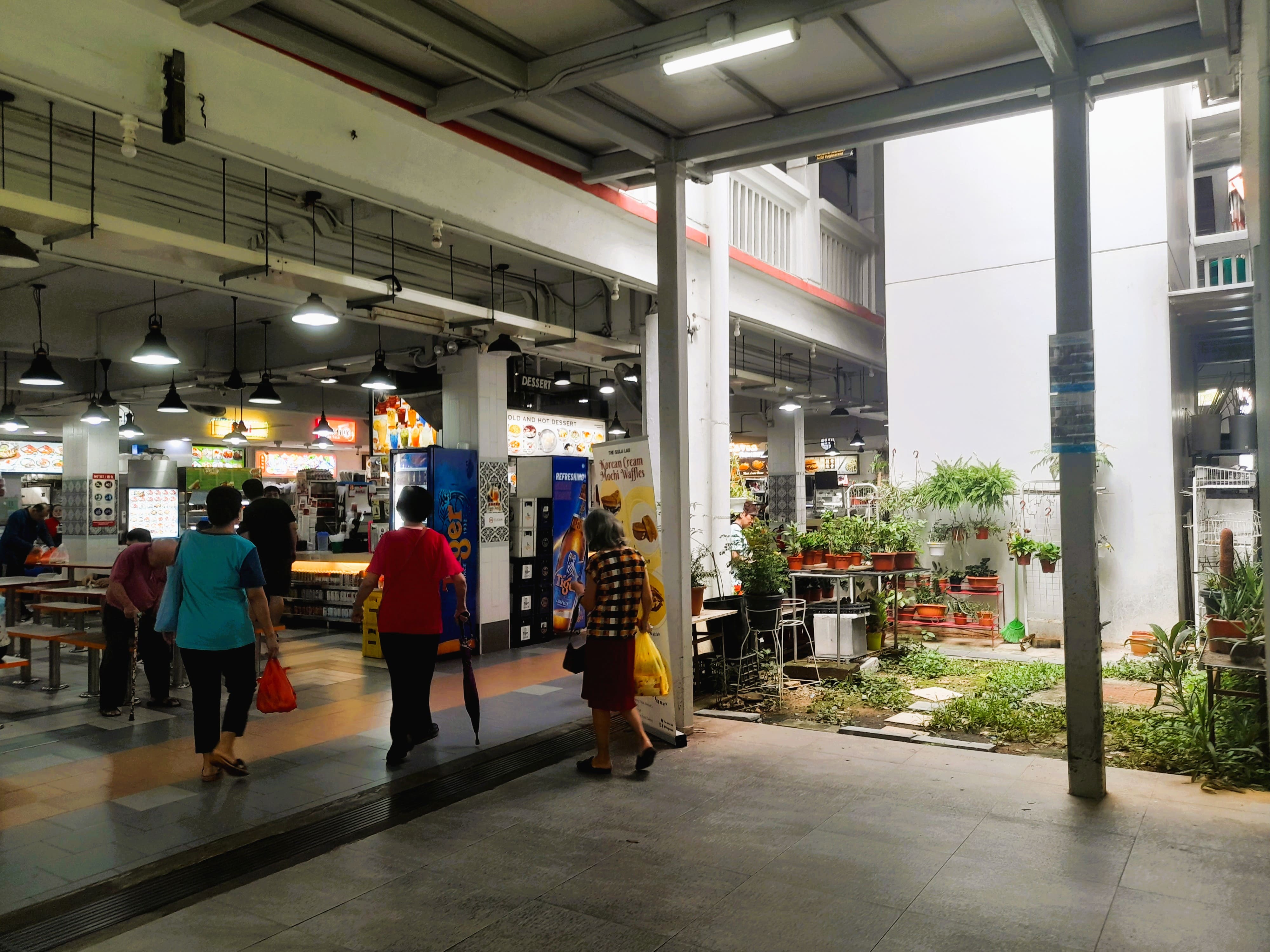
A typical HDB ground floor, complete with a kopitiam (hawker centre), pasar (fresh food market), small businesses, and common comumunity spaces.
Housing Development Board (HDB) flats. Where groups of uncles congregate and play chess on the void deck, or lay down on benches and watch videos on their phones, sounds of their mother tongue crackling through the speaker. Laundry hanging from poles outside kitchen windows like flags, void deck funerals and weddings alike, corner shops and coffee shops, kindergartens, playgrounds, potted plants sprawling from ground level flats, the sound of soap operas as you walk past units, aunties exercising in the compound, the ding of the elevator followed by steps shuffling past your open door, only a gate separating the pathway from the inside of the flat. Muggy air that lulls you to sleep after your midday meal. The distinctive sounds of Asian Koels at 5am, still pitch black. You can also hear roosters sometimes.
It's the second home I never really lived in.
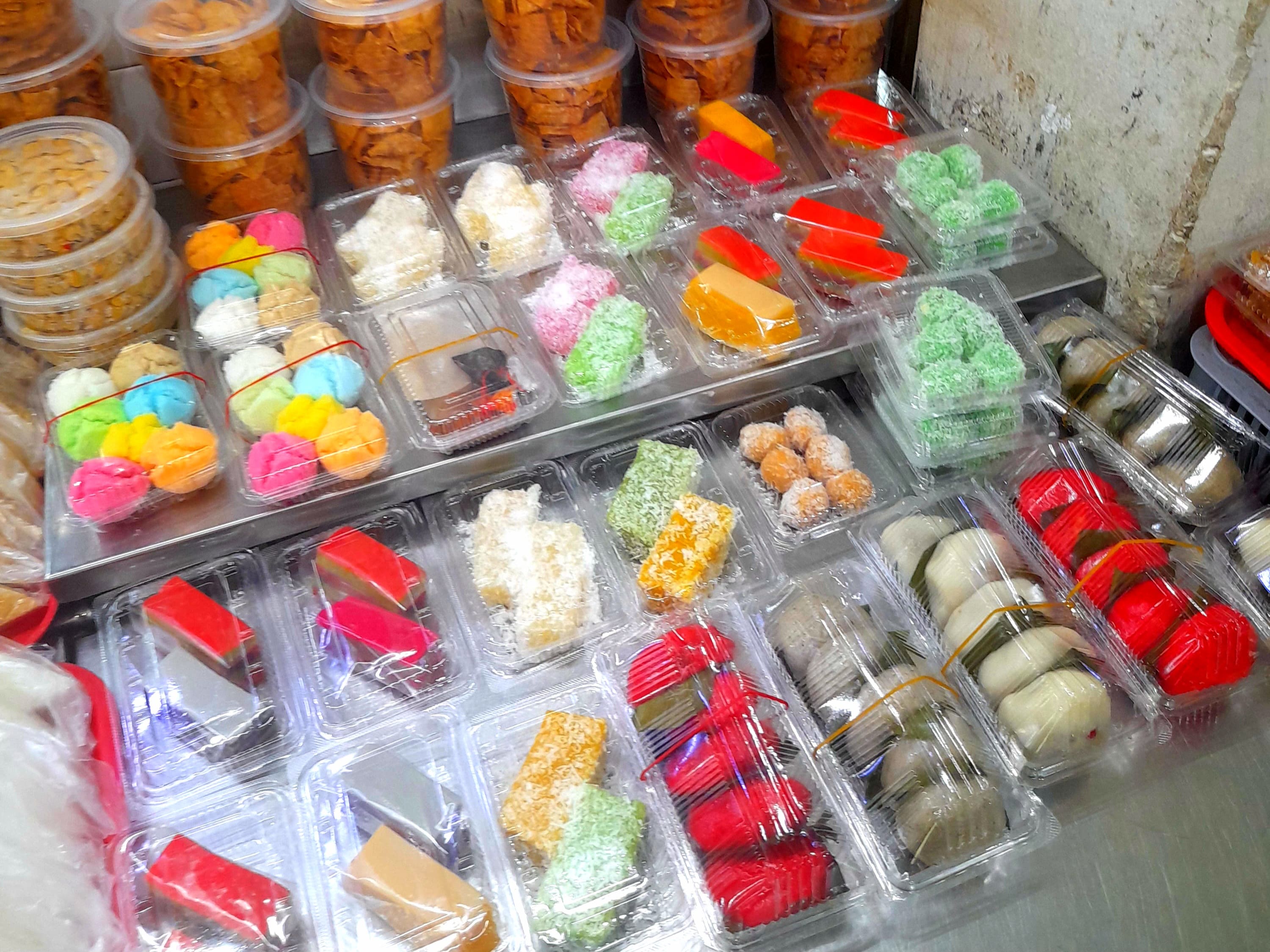
Kuehs sold at the HDB pasar, including kue mangkok, klepon, kue lapis, and ang ku kueh.
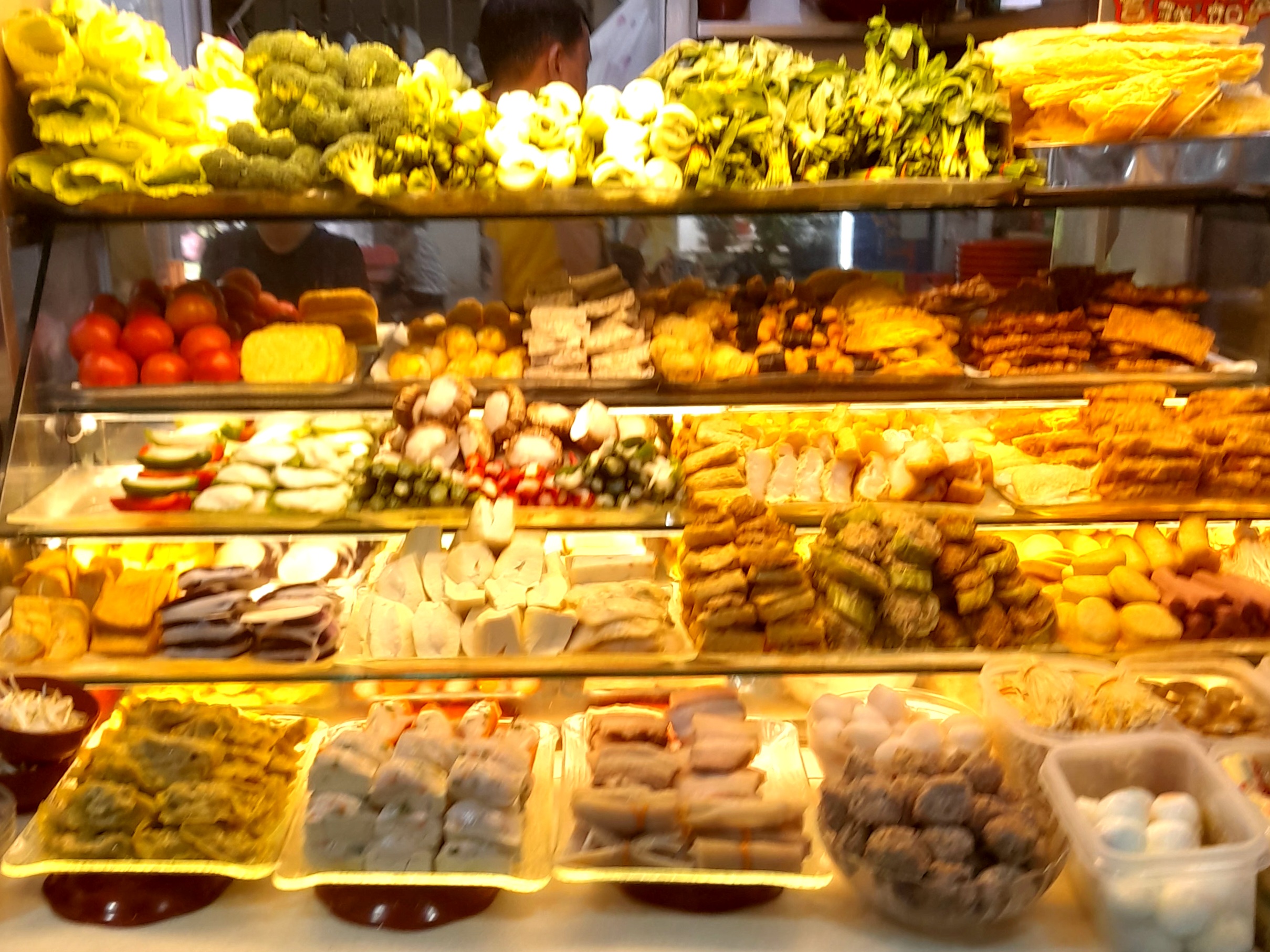
A yong tau foo self serve bar with an abundance of tofu, meatballs and leafy vegetables - one of my favourite food displays to pore over.
The last few days of the trip included lunches at a dimsum restaurant and the Bee Cheng Hiang grillery. Normally, I'm not a picky eater and am quite game to try anything, but good god, vinegar pork trotters (猪脚醋) is really an acquired taste. TIL it's also consumed by women post-partum during the Chinese cultural practice of confinement. Makes me think of the astringent taste of the kedondong/ambarella from earlier.
Now, I do not care how old I am, but I will always eat the custard lava buns and will always consider them as part of the main course. I know I could be more mature and eat more chicken feet instead (though they are also tasty).
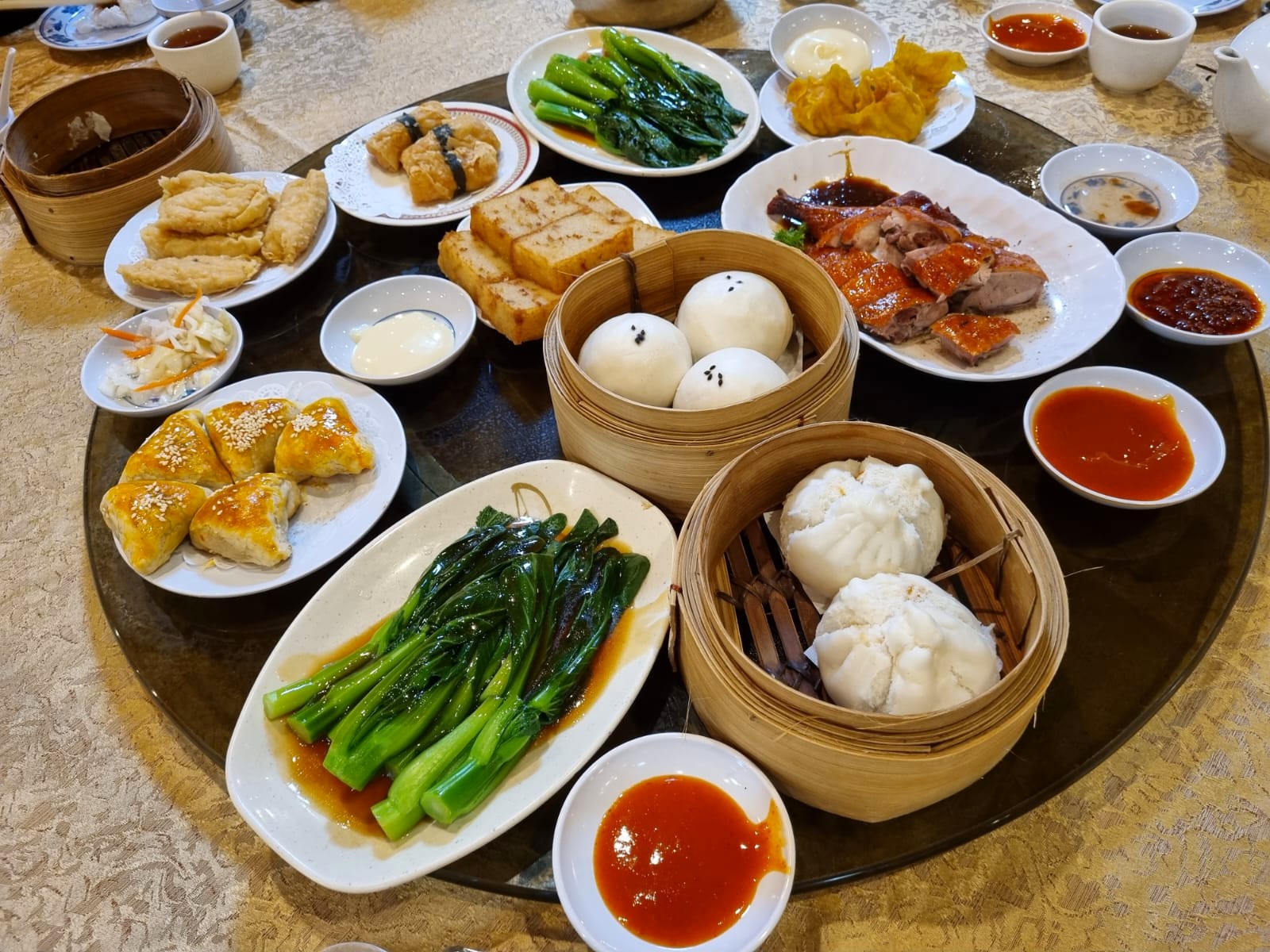
Dimsum spread.
Bee Cheng Hiang is a Singaporean brand which is well known for their processed meat by-products, namely bakkwa, a sweet and savoury BBQ pork jerky. A very unassuming and honestly, weird upon first impression, item that ended up being my favourite was the bakkwa ice cream. Yeah, you heard right. The bakkwa ice cream was divine. It had the texture of cookies and cream ice cream, and the savoury notes of the bakkwa worked similarly to salted caramel.
I honestly have no neat way to end this post, but just know my heart and stomach was very full by the end of it.